Future of the Left are my favourite contemporary rock band still making utterly vital music today, so it was an absolute delight to find that Falco had agreed to a Lichfield Interrogates interview. The band formed shortly after the split of Falco's previous group, the legendary acerbic cult noise-rockers Mclusky, and released their wonderfully gritty and unforgiving fifth album, The Peace and Truce of Future of the Left, in 2016. I caught up with Falco to celebrate ten years of Future of the Left and talk through each of the band's five eras.

1. Curses (2007)

It was a sad day when Mclusky ended but it was needed, it was inevitable. It couldn’t keep crawling along as it was, it was a genuinely horrible experience to be in that band for the last few months. I started writing songs the next day – they were rubbish, as you would expect but it was very easy in the end. There was an inevitably to it. I wanted to keep making music. The only reason Mclusky lasted so long was because I was determined for it to last so long. I can’t really go into too much detail on that but there was another member of the band that I had to motivate on an almost daily basis and it was exhausting.
On Future of the Left, there was no name at first – in fact, coming up with a band name is, my experience, the singularly hardest thing to do because you’re then stuck with it for the rest of your “career”. I knew I wanted to make music with Jack, because not only was he a great drummer but he was improving a lot at the time – as a football manager would say, he wasn’t the finished article when he came into us.
He was a jazz drummer, and he had great hands and he had great imagination but we were used to a more solid kind of kick-drum drummer, but he improved and flourished to such a degree and I think it was so really liberating for him not playing two-thirds of the songs in a set which were written by another individual and playing stuff that he could actually write himself. I think from the very start of Future of the Left you can just hear Jack’s drumming. People always talk about the lyrics and the bass but for me, Jack’s drumming is just such an essential part of it, I just think he’s an absolutely…he’s a messy eater, but he’s an absolutely exceptional drummer.
So it started right away, we didn’t really have anyone in mind that we wanted to play with, the original idea was that I wouldn’t sing because I didn’t like singing, because all the time I spent on tour I worried about losing my voice, going home early, not drinking too much…you focus a lot of your life so you can actually go on tour, but you then find yourself in that position and the most important thing is doing a good show every night, as opposed to getting drunk and meeting fancy ladies, you know? That was always the point.
I think the way rock ‘n’ roll works is that people get distracted and led to believe that those other trappings were the point in the first place and sometimes what it takes is people having conversations with people who genuinely love the music and have been affected by it, and by that I don’t necessarily mean people who have been affected by it in a profound way, I mean just as simple as cheering them up. It’s an amazing power to have and it shouldn’t be treated lightly.
I think my favourite moments on the record are The Lord Hates a Coward and Manchasm but there aren’t too many songs that mention the title in them, so it’s taken me ten years to realise one of my favourites is called My Gymnastic Past.
That was a really good fun song to play. There were a lot of songs we had to put to bed when Kelson left the band, not because we couldn’t play them but because there was something so very uniquely Kelson about them. He’s always off the beat with his bass playing, he’s not a bass player as such, he’s somebody who just hits the instrument rhythmically and as a result he plays it in a different way to most bass players.
That’s something which has definitely changed in my writing over the years – very few of the songs had the titles in them at one stage until recently, whereas recently, even though I’m trying to write songs without the titles in them, that ends up being the chorus. It just shows that when a song happens it just happens in a way, you can’t really, in any conscience, give an idea or a theme to a song, they just come out the way they do and you’ve just got to go “oh fuck it, that’s the song”.
Manchasm is an astonishing song and probably most people’s highlight of the album.
Manchasm is really good fun – we just knew, the second that we wrote it, that we just wanted to play it to people right away, it’s the kind of song that would appeal to what people might optimistically call your core fans but also other people as well, without trying to, just because it was so much bloody fun, and the keyboard part came up because that’s all I could play really. I’m not a keyboard player really, and almost proudly so...speaking of songs that mention cats I’m just going to go and stop one of my cats from scraping like fuck at the cupboard.
How do you feel about the term ‘noise-rock’ in relation to your music? I’m not so fond of it because it implies you’re unlistenable, unmelodic and pretentious, which your music definitely isn’t.
It’s noisy rock and it’s made by people who like stuff which ranges from poppy stuff (when I say poppy I don’t mean in the Taylor Swift sense) and melody-led music to weird, sprawling noisy nasty stuff like the Jesus Lizard, but we’re not a band like that. The Jesus Lizard don’t write pop songs in any kind of sense, whereas most of the Future of the Left songs, not all of them (a song like Fuck the Countryside Alliance is definitely just an idea or riff with muttering over the top of it) are structured like traditional rock songs – they have a verse, they have a chorus and the thing which put them on the album as opposed to other songs we wrote is that they have the best vocal melodies.
Writing good pieces of music happens all the time in rehearsals – not just for us, for all kinds of bands – we play and bits sound good but the trick is getting some kind of manageable melody over it. I’m probably wrong in this but I always think being an instrumental band is the scam of the fucking century, because you can just come up with interesting music and then not be arsed to take the really difficult step which is producing some kind of melody. I find it a bit of a challenge, particularly now, to try and write vocals over some of the most complicated rhythms I can, whilst still making it cohesive as opposed to just a fucking exercise. But yes, it’s loud music and it’s not thick but it doesn’t fucking go on about it too much.
I think stuff which has a pretence to being, if not “intelligent” as that sounds terrible, but at least cerebral in some way tends to wear it around its neck like a badge, and I’d rather people dip in and if they just want a bit of volume and adrenaline they can get that from it, but if they want to look a little deeper they can get other things from it as well, but most of all, it was just meant to be fun.
It’s meant to be fun, but from the start that’s filtered through the three personalities of the people in the band. That’s our idea of fun – there’s no catharsis about it really, there might be the occasional line in a lyric which touches back to some fucking unrequited love or a shit sandwich or something, but a rock band’s not a kind of way of dealing with pain, it’s not a special kind of pain kind of moment. It’s just loads of fun, there’s no better fun than going into a room with your mates and just plugging in and making a fucking racket. That’s really as complicated as it gets. The details, like the fucking stupid lyrics, and the weird offbeat bass playing and the crazy tom-tom playing, that’s just that fun filtered through our personalities.
Suddenly it's a Folk Song is one example of a song that’s hardly overly abrasive or particularly difficult, in fact it’s one of your kind of Pixies-esque moments.
It’s a nice song, and if we had a keyboard that functioned properly we’d still play it occasionally, but honestly, I love those keyboard songs. We’d never do another song like Manchasm as it’s very much a one-off, you can’t really follow that structure of song – a lot of bands would and good luck to them, they’ll probably get massive record sales, but we would then get bored by doing another kind of song like that – it would seem silly and tokenistic.
Bringing a keyboard onto the stage is probably the worst thing that can happen to a functioning operating band, especially an old analogue keyboard like a Roland Juno-60 because it breaks if it’s Tuesday or if it’s two degrees warmer than usual or if it’s an important show, or if it’s a non-important show, or if it just fucking hates French people or something. You want to keep everything, and I think this goes for life in general, as simple as possible.
I’ve got too many guitar tunings now – I think if I’m doing this other thing I’m looking to do live, there’s only going to be one guitar tuning – there’s gonna be an overdrive pedal and a tuner pedal and that’s it. In a way, you’re restricting yourself, but you can find beauty in those restrictions, and also, there’s just less things that can go wrong. That keyboard, honestly…we’ve got a reputation for being funny and talking between songs, but that’s only because the keyboard’s always fucking broken.
Manchasm
2. Travels with Myself and Another (2009)

The keyboard also plays a prominent role in songs on the second album like You Need Satan More Than He Needs You and Throwing Bricks at Trains – I was wondering what your memories of that era were?
Of all the albums we’ve had to write, that was the hardest one. We spent ages writing it and we wrote nothing. We had this one song called Two Doctors, which was loosely, in a fucking oblique way about the Madeleine McCann thing or at least that’s the thing that gave me the title, and it was the best start to a song we’d ever had. I love writing music that’s mathy, but the melody is so strong that you forget that it’s mathy. After 20 seconds, it shouldn’t sound clever, it should sound natural. You wanna have these, in theory, disparate elements which end up sounding like they belonged together all along. We played this song for around four months and whilst we were rehearsing three times a week, fifteen hours a week, the most I’ve ever rehearsed in my life and it was nightmarish. I wouldn’t say we fell out but none of us were happy because we just couldn’t get anything done or moved on – it’s the longest I’ve ever gone in my life, and then one rehearsal we wrote Arming Eritrea and Land of My Formers, and wrote the rest of the album in about six days.
That’s what happens – creativity’s not as simple as turning on a tap, sometimes there’s a blockage and you need to work through it, and sometimes you don’t realise even at the time that the work you were doing in that earlier period where it seemed like nothing was working that there were little things you were trying which then once you’d been liberated, you’d written two songs and the pressure had come off, all of that shit just poured through. For me, once you got an album opener, which Arming Eritrea obviously was from the second we wrote it, and Land of My Formers, which wasn’t exactly an opener but a really strong somewhere-in-the-middle of the album kind of song, it was just really easy.
For me, Travels has some of the absolute best songs on, but it has some of the worst songs on as well. I really like the way it sounds, I love Throwing Bricks at Trains, Lapsed Catholics, Arming Eritrea etc, but there’s just a few songs that I feel, with the benefit of hindsight, aren’t necessarily my favourites – I feel they’re a little bit slight, but people really like those songs.
On Twitter recently, I said I didn’t like a couple of songs here or there – I think sometimes that upsets people when it’s a song they like. It’s a new March’s resolution to not criticise individual songs. It’s a terrible thing when people talk about the whole “return to form” thing or say “buy our new album, our last album wasn’t very good”. Anybody who tells you their last album wasn’t very good should reimburse you for the fucking money you spent on it. I’m pleased with all the albums we’ve done, obviously they vary a little bit in quality, but if I’m ever ashamed of an album, I’ll get a loan out – actually, we don’t sell that many records so I don’t think we can afford to reimburse everybody that bought our albums…actually, scrap that – fuck everybody.
I would say overall, when people talk about the band that it’s generally their favourite album. I see every album get mentioned – The Plot Against Common Sense gets mentioned the least, but for some people, it is their favourite. Travels is not my favourite, but in the end it was relatively quick and easy after being the worst experience at first. Even though some people say it’s their favourite now, the worst-attended shows we ever did were supporting that record. We played The Garage in London to 300 people or so, which might sound fantastic to a lot of bands, but we were used to selling out The Venue, which is twice that. The album only seems to have resonated with people once it became a historic artefact, which is great, because it means a lot of the shows we did supporting it were fucking miserable.
I think I read somewhere that you were frustrated by the lack of record company promotion for that album.
To say the fucking least, yeah. One video (for The Hope That House Built) was released seven months before the album, which was very well shot, and the guys did a good job for it, but I don’t think it’s the best song…I saw the video for it and I liked it and I thought “nobody’s gonna fucking buy the record on the basis of that”. I just don’t think it makes the band look as exciting as we were.
It’s got somebody urinating in it though.
It does, that’s right. It was certainly no fault on the part of the video makers but there was nothing else – I didn’t see one poster and they printed up only about 250 vinyl (which were known as records once). The only promotion I saw actively was at one show which we did in New York where there was a guy out front giving out postcards with a thing I wrote after the album was leaked early, just whinging on like a twat but in quite a funny way, and they were giving that out to people who were already coming to the show. That was the promotion.
And you know what, “oh, you haven’t sold any records”. We were told by people that we were gonna be dropped even before that album even came out. It was heartbreaking to put that much money and time and your whole life into something and sacrifice so much for it, and then to be fucked over so callously by people who claim to be the champion of bands.
Like any organisation, there’s good and bad people everywhere – I don’t go around thinking about it day-to-day, but I will always have a deep anger in me for the way we were treated and a couple of financial things, which frankly if you made public it would just make them look like THE biggest cunts on earth, but I’m saving that for the memoir, not just throwing that shit around.
I don’t know what your attitude to singles is currently but there haven’t really been any for a while and there was only one on Travels – then again, “single” is an ambiguous term now anyway.
Well, it’s an album promotional MP3. Frankly, the fact that Arming Eritrea wasn’t released as a single is fucking mental, and it’s an absolute insult - I’m not saying it’s the best song ever – there are people who like that song, there are people who don’t like that song. I love playing that song, it’s right up my fucking street. That is a song that, most rock fans I think, would have a good fucking chance of not just liking but maybe falling in love with. The label decided not to do that, so that’s on them. It’s not on us, we did all the hard work, so there we are. Life’s too short to get angry about something for too long except in a comical way but Beggars Banquet, especially around that album, especially around that song, they had a duty of care to us and they simply didn’t see it through.
Arming Eritrea
3. The Plot Against Common Sense (2012)

There’s quite a bit of a gap between albums two and three – I was wondering what was happening around then and if you could tell us more about the change in line-up?
Basically, the reason (for the gap) was the line-up change. Kelson told us towards the end of touring Travels that he still wanted to do the band but he wanted to do it on a much more occasional basis, and me and Jack, even though we never wanted to tour to the extent that certain friends of ours in bands did, like 9, 10, 11 months a year, we wanted to be a proper band rather than an occasional release an album every few years kind of thing.
It was very sad, but I understood – Kelson made two good records with us and made a very good record with his previous band, Jarcrew as well, who were excellent, and he was a fantastic frontman. He got sick of living on no money, and it was tough for him – we’re still on good terms, he still plays occasionally with a band called Truckers of Husk who are basically Jarcrew with one different member, who do a more post-rocky thing. They don’t play very much at the moment and he’s training to be a dentist – he will flourish, I just know I don’t want the mad cunt operating on my teeth but that’s only because I’ve shared a hotel room with him.
So, it was a question of replacing him. Our friend Steve Hodson, who played in Oceansize and Kong and now sings for a band called USA Nails, who are excellent, played for us for a little bit. He has ideas coming out of him at an unbelievable rate and is an incredible musician. We then met Jimmy, because he was singing in a band called Strange News From Another Star, with our friend Mark Foley, who is mentioned in Manchasm. Originally, me, Jack and Jimmy were gonna start another band and that ended up being similar enough to Future of the Left that we decided it was ridiculous to have the two bands. I’d been going out with Julia for 5-6 months – obviously it’s a really bad idea to be in a band with someone you’re in a relationship with, so that’s precisely what I did.
That’s a bit of a rarity in bands I think.
It tends to work for people mostly when you just keep fucking quiet about it, though it’s very difficult to keep it quiet when you’re having a fucking baby together, it turns out – so far it hasn’t been without its tensions as you would imagine because, one-word explanation: “life”, but overall it’s been a very healthy thing. I don’t think we’ve chosen life in rock music to live perpetual child/teenage years but that is definitely part of the appeal. Part of being older, of course, involves embracing things that aren’t necessarily that, and taking that enthusiasm and approaching it with more of an adult sense of organisation and purpose.
The Plot Against Common Sense has a lot of naysayers and to a degree I understand that and it probably could have done with being trimmed by a couple of songs, but people always say they don’t like songs like Cosmo’s Ladder, and if people don’t like a song, that’s fine but that was exactly the kind of song we were trying to write, so if you don’t like it, okay I get it, but tough shit - it’s not something that went wrong. There’s a song towards the end called Rubber Animals, which I guess is a probably bit more throwaway, another song that gets a lot of criticism is Camp Cappuccino which I love. I think it’s a really silly, fun camp song but a lot of people seem to think it’s the absolute worst.
There’s some of my absolute favourites on that record like A Guide to Men and Failed Olympic Bid – Jimmy plays simple guitar lines on that song but it’s exactly what it needs to be. It’s industrial music but doesn’t make me think of guys in long coats just stomping around talking about “society”. I love Notes on Achieving Orbit and Robocop’s a really fun song. As an album, it’s all over the place but it’s on the basis of just writing a million songs. There’d be the occasional rehearsal where it didn’t work out of course, it’s a creative process.
We tend to just write in rehearsals, we don’t bring stuff in. For me, writing that album was pleasurable. We recorded it in the Manics' studios – we weren’t always able to get the dates that we wanted because they’re a busy band so we ended up taking the album and finishing it elsewhere. Faster Studios doesn’t have the same drum sound as Monnow Valley where we’ve recorded the other four albums but we couldn’t afford to record at Monnow Valley at the time. We didn’t want to do any pledge funding or Kickstarter thing then as it didn’t feel right at the time. We had a couple of tentative things from record labels but we weren’t entirely sold on working with labels again after the experience we’d had. A friend who wishes to continue to remain nameless gave us some money to record the album. If we hadn’t had that, that album wouldn’t have been made. It was released on Xtra Mile but they didn’t pay for it – we licenced it to them.
There are some songs like Sheena, which when I listen back to it on a proper stereo is a great song, but I just remember playing it live – it sounded tinny and it was a pain in the arse. There’s no breath in it - it was like trying to gargle the national anthem through minestrone soup or something. I don’t like minestrone soup and I don’t like the fucking national anthem so that’s a bad start. I think the things that were good about that record weren’t necessarily the things we’re good at. If you look at the following record I think maybe those records were the wrong way around.
I think I remember you saying you’re not too fond of Sheena or Least of Your Problems because you think anyone could have written them.
They’re more normal songs, absolutely, whereas a song like Notes, Cosmo’s or Rococop 4, only we could have written those songs. Those other songs are really good songs but you could imagine another band playing those.
Then there was the infamous Pitchfork review.
Yeah, to be honest with you though, with the budgets we were talking about, it was the best promotion we could have had for the record. I had real hopes for that record because it was so diverse. I did think it was the kind of record to take us to a much wider audience – and by wider I don’t necessarily mean obese. Still a selective audience – there’s never any desire to be some kind of stadium band. Shows like that aren’t fun – I wouldn’t know about playing a stadium but we’ve certainly played some bigger shows. For me there’s an ideal size, like 600 people – that’s amazing and the bigger it gets, you just lose something of the intimacy even as you gain in the scale. I just don’t go to arena shows – if I want to hear a band I like sound bad, I’d put my stereo in a fucking bag and take nine paracetamol and charge myself nine fucking quid for a warm can of Tuborg.
Unfortunately, the way the review came out ages before the album and before any other review, the second I saw that review, I knew it was essentially built on a house of rotting shit. It broke my heart, I will admit, I’m not a particularly emotional person but I remember someone waking me up and saying it was reviewed by someone on Pitchfork, and obviously that’s the pre-eminent website. The seal of approval from Pitchfork can sell you thousands of records, or at the very least it can put you in the ears of thousands of people who can then make up their own mind about whether they like you or not. It was a really devastating moment. The only real way to deal with life is to accept that and then have fun with it.
By the way, I didn’t realise Mark Foley was a real person.
Well, Mark Foley is the guy who co-owns our rehearsal studios but he was also a disgraced American politician, so the dual meaning of it, without people ever knowing what you were talking about, particularly in the States, was delicious.
Failed Olympic Bid
4. How to Stop Your Brain in an Accident (2013)

The songs were just flowing by that point – we had some songs then songs like Something Happened just happened in the studio. It’s just kind of a rule – you usually end up coming out of the studio with the record you went into it with. That’s one of the rules about writing and making a record unless you’re financed by mad people who will put you in the studio for two months. We do our record in about five or six days. There’s no time to fuck around. It’s “get the songs recorded, you bastards”. It has to be. There’s a ping-pong table but fuck it if you get anywhere near it. It was really easy.
When we did the Pledge Music thing, we were very sceptical about doing it – I don’t know why, I just thought we were going to get loads of stick for doing it. It went well, we raised the money quickly. Whereas the Pitchfork review was heartbreaking, it was the opposite when we did that. That day, not knowing whether we’d reach the target or not…that people would have that much faith in you. It’s faith that is shown unfortunately via the medium of money – you shouldn’t always go around measuring your life or your art simply by the amount of money people put into it, but it was an incredible day. I don’t walk around this world needing validation, my own conscience is my own guide, but that day was lovely and it felt special and dare I say it, magical, and that just continued into making the album.
The EPs/mini-albums we did, Human Death and Love Songs for Our Husbands, meant it was 24 songs in about three or four months of writing and it was just loads of fun. From Plot onwards, we just didn’t have that much time to write. Jack’s got two kids now, we’ve got a baby on the way, Jimmy, when he was in the band, was living in West Wales and working in the film industry so he was working every hour God or whichever magical deity you believe in sends, so we’d be lucky to get three hours a week. It’s the same now. We always have loads of fun doing it but if we had more, maybe it would like more of a job, in a couple of senses of the word.
There’s also wonderful uncharted territory on that album like French Lessons and Why Aren’t I Going to Hell?
Yeah, which all just came through having fun and pissing around. When you’re a younger musician, maybe you’ll like a band and you’ll just end up making loads of stuff that sounds like that band. When you’re older maybe, that stuff’s passed through you in a fibrous kind of way, you take little aspects of things you like and when things are going well you go, “I’ve gained confidence in doing this and I’m going to branch out into other things I like”. Your subconscious goes “we’ll give that a go”, if things happen and they’re good and they’re easy then that’s the way it works.
I think How to Stop isn’t as varied as the Plot, but it’s still a colourful, varied, big-sounding album. Peace and Truce is closer and nastier, How to Stop is big and quite boomy and I’m really pleased with that album.
French Lessons is quite delicate by Future of the Left standards.
It was again very natural. It wasn’t like “time to write a ballad! Get in, write t’ ballad!”. The one disadvantage of that is that the song Hey Precious ended up going on Human Death. I think on any other record that we’d done, that would have been up because that’s a great song. I’m a little bit regretful about that song sometimes, I think it should have been on the album but I’ll get over it.
Of course, Singing of the Bonesaws is now quite legendary and one of your most notable examples of employing fake accents.
That was a lot of fun. It was one of the only times I’d written the lyrics for a song then written it. It felt normal doing it in my normal voice so I thought “let’s do a stupid voice”. I sing things in a way that would entertain me and if it entertains me, it will entertain other people or it won’t. Even when we were making it if seemed like an important song for us. That song is appreciated and I appreciate that people appreciate it.
Can you tell us about how the Mclusky* reunion came about?
We were asked to do a show for Le Pub in Newport and I didn’t really want to do a Future of the Left show so I said we would maybe do a Mclusky (with an asterisk) show. We made a few grand so we said we’d do another one at Clwb Ifor Bach, which looks like it might close anyway but we may get another few years out of it so that’s something, and another one for Cancer Research at The Garage, and one before that for the staff at the Buffalo Bar in London, which was closing.
After we did that, we did a few for ourselves. We really enjoyed playing the songs and got an offer from 2000trees Festival and made a little bit of cash – I never made any money when I was in that band, so I loved the fact that I could walk away with a little bit of money from those shows as opposed to thinking about what lies I was going to tell work the next day if I came in at 11am, because there’s only so many dental appointments you can pretend to have really.
The shows were just really easy and really good fun. With something like that, you do all the hard work in the early days and then you hope there’s a time that it can pay off for you. It was also great to play with Jarcrew who reunited for two of those shows, and really nice to see them play again because they were a really fantastic band.
With Christian Fitness, I remember talking to Julia when we were playing in Sydney and I told her I was sick of losing contracts, sick of doing temporary jobs all the time and fitting it in between bands. I said I just wanted to set up a desk at home so I did that. I lost my job about three weeks later because it was the end of the contract and just started from there really. I’ve probably made a little bit less than I would in those jobs but my God, my soul is richer. I do miss interacting with people on a daily basis, but I’m not sure they miss interacting with me.
Do you think Mclusky’s reputation has grown since the split?
Yeah, it always does though, because it can. People can talk about it nostalgically because it’s not there anymore. If people want to like that more than Future of the Left, that’s cool, I’m just glad they like some of it. Mclusky was very exciting sometimes, sometimes it was rubbish. With Future of the Left, I can’t remember us playing a bad show. The shows now are just based on how good the crowd is, and if the crowd are good they can just lift you to another…I’m not gonna say ‘realm’, because I’m not George R.R. Martin, but certainly to another level and I think good crowds and good places understand that. You can’t just pour your fun out into a fucking vacuum.
I can genuinely say that at this moment in time I’ve never enjoyed making music more. I’ve got myself a new guitar, a Fender Squire Telecaster, a Japanese-made one about a month-and-a-half ago, and I’ve written 65 songs in that time, it’s been amazing, to the point where I’m just about to do another Christian Fitness album. The aim is to release a new Christian Fitness album and a Future of the Left album maybe next January because we’ve written so much stuff even in small rehearsals, and then I want to release another Christian Fitness album in April. It needs to be at least five albums in two years – that’s the plan.
Look at old AC/DC albums from the seventies, they’ve got a lot of filler on them. Another three songs, we can do a record - there is no point in me putting out filler, I’m putting out songs that I love. So many songs get rejected – I’m just loving music at the moment, more than I ever have. I always used to love writing songs and singing songs but I'm really loving playing guitar at the moment. The way I play guitar you see, it’s meant to be funk – it doesn’t sound like funk, of course, but I’m just loving playing guitar, it’s just the best thing in the world.
Are there any contemporary bands out there you would currently recommend?
There’s good bands out there – most of the bands I would recommend would be bands we’re friends with like USA Nails or Blacklisters or St. Pierre Snake Invasion. Those bands aren’t necessarily doing anything new as much as nobody’s doing anything new, but they’re really good bands with personalities. When I’m writing music I tend not to listen to other music because I don’t want to copy it.
What was good for me was getting into XTC again, especially Drums and Wires. It’s really liberating to hear a vocalist who’s not scared of deliberately sounding like an idiot. There’s no “cool” about it – if you listen to Talking Heads, there’s something very self-conscious about it. I think there’s something in a band like XTC that’s not so self-aware, which makes it more dangerous for me, even though they’re from Swindon and Talking Heads are from New York.
When people in bands are moaning, it’s important to remember that music isn’t just the means, it’s the fucking end as well. I try and make money from music so I can have more time to make music. It’s either my policy or my coping strategy, I can’t quite decide which one.
French Lessons
5. The Peace and Truce of Future of the Left (2016)

I’m really happy with The Peace and Truce. In theory, maybe if you were designing an album you’d want more light and shade in there, it’s a little bit fucking relentless but I think that’s the thing that either works for people or it doesn’t, I’m really happy with it. Back When I Was Brilliant I know could have been better but people still love it. There’s two or three songs in the career of the band and Mclusky that are just missing something for me to make it better, but I really love the record. It’s got nothing remotely close to a single on it, it’s quite nasty and I’m very pleased with it.
I think it’s an album that should be enjoyed from start-to-finish rather than cherry-picked from.
I would say that’s true. I particularly love In a Former Life. Like I was saying earlier, that song sounds exactly what I aimed or. Miners’ Gruel, The Limits of Battleships – I really like the other songs, but these are songs that are 100% successful. I love playing Battleships – playing it is hard, it’s the only one where I have to write down the lyrics otherwise I forget them but I love it. We don’t always do In a Former Life live because we need people to do backing vocals for it but playing Gruel and Battleships live is just an amazing feeling.
If you see a band and you can see they’re having an amazing time and are not just trying to get your approval so you can decide whether to fucking join in or not, it’s just infectious. Having an extra live guitarist (Jimmy Watkins left after How to Stop Your Brain in an Accident) just adds a dynamic and a power as long as it’s done tastefully. Ian who plays in Art Brut is a fantastic guitar player. We did a gig last year as a three-piece, which was the first time I’d done it for years so it was weird, but it was fun.
Me and Julia are going to be at home together looking after the baby for a few months so we can hopefully pay for a babysitter twice a week so we can rehearse. We’re gonna try and get the album written and recorded this year, that’s the plan. I’d like to take Christian Fitness live – I am writing the new album with that in mind, but I don’t know. One of the differences generally is that the Future of the Left stuff is written live so it all has a live energy to it, there’s something very particular about the way everything works, the fact that vocals are in a higher register and everything else.
With a lot of the Christian Fitness stuff, a lot of the singing’s in a lower register, it’s almost talking at times – that just doesn’t come across very well live, it just doesn’t have the same impact. Also, there’s a lot more instrumentation on the Christian Fitness albums, because there can be, it’s a studio thing so you can play around, add a layer here and there, there’s nothing like that on FOTL albums, that’s just how the band sounds. For example, on Travels, there’s just one guitar overdub on that album and that’s it. You’ll be able to hear that when we do our live video.
We’re just finishing off the live video* that we did in The Garage last year, and we’ve mixed it as we would a record. You’ll be able to hear that that’s how the band sounds. We’re gonna put it on Bandcamp I think, and sell it as a video and audio file. The show is about an hour and 20 minutes. It’s not the funniest show, as I think when it’s a big show you don’t have the same talking to the audience. With Last Night I Saved Her From Vampires (2008 FOTL live album), that’s a very funny one but the audio’s not as good, it doesn’t sound as powerful – this is kind of the opposite.
It’s not not funny – it just might not be as funny as some of the other shows on the tour, which is a little bit of a shame, maybe I was a little bit nervous, I don’t think so though, but honestly it looks great – the guys filming it shot it with six or seven cameras. My mate Stef, who did the last Christian Fitness album, recorded it for us properly and we spent a few days mixing it and it sounds great.
Anybody who’s a fan of the band will think it sounds great – and I’m thinking about a lot of people overseas like anybody who’s from the States, where we have enough people who want to see the band but not enough so we could go over there and make money, should love it. It’s really good to have this document about what we were doing with our lives at the time, and I think the fact that Julia was doing that show when she was four-and-a-half months pregnant is pretty amazing. The shows we’ve just done, she was six-and-a-half months pregnant. I know I’m married to her, but she’s an absolute machine, there’s nobody on earth who loves rock ‘n’ roll more than her, and by rock ‘n’ roll I mean rock ‘n’ roll music as opposed to the other shit that surrounds it.
50 Days Before the Hun/The Peace and Truce of Future of the Left album trailer
Thanks, Falco!
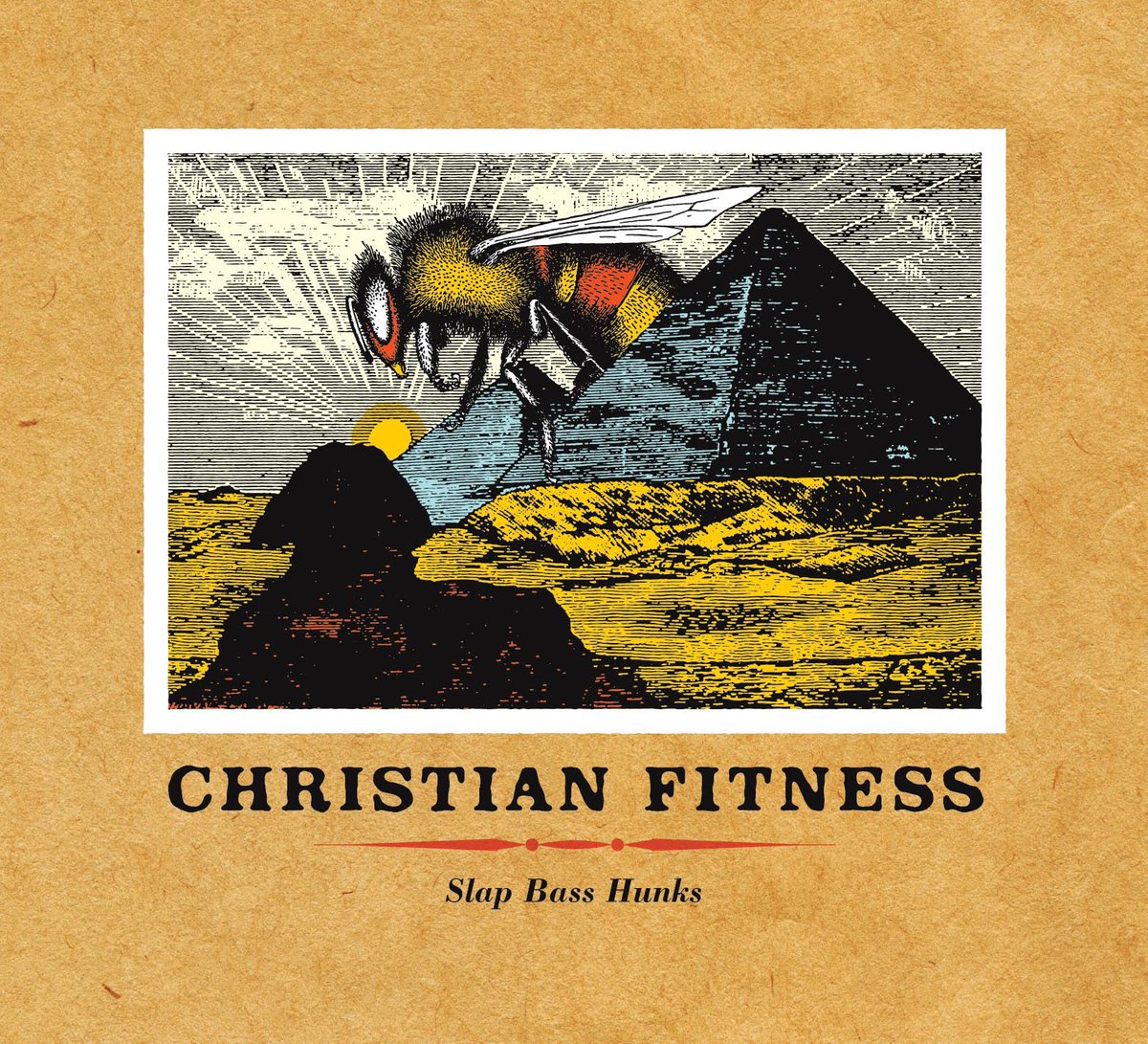
Listen to Bruce Hated Puppies, Bees Mode and the title track from the just-released Christian Fitness album right now.
Bruce Hated Puppies
Bees Mode
Slap Bass Hunks
Buy Slap Bass Hunks now! See below.
https://christianfitness.bandcamp.com/album/slap-bass-hunks
*EDIT: You can buy FUTURE OF THE LEFT - LIVE AT THE GARAGE, LONDON - 1ST DECEMBER 2016 right now by clicking here.
*ANOTHER ONE, AS DJ KHALED MIGHT HOWL: Mclusky* are doing another one-off set, this time at the Cluny in Newcastle - still some tickets left at the time of writing, buy here.
You must follow Falco and Future of the Left on Facebook and Twitter.
At Lichfield Interrogates HQ, we loathe Twitter with the fire of a thousand suns but you can follow us here if you must.


