Friday, October 28, 2016

LICHFIELD INTERROGATES: Chris Williamson

Chris Williamson is a Labour party politician who held the Derby North seat between 2010-2015. He was leader of Derby City Council twice and has also been a social worker and welfare rights officer. A prominent vegan and animal rights activist, Chris is vice chair of the Local Government Anti Poverty Forum and was on the front bench as a shadow minister for communities and local government between 2010-2013. On the left of the party, Chris was one of 16 signatories that signed an open letter to Ed Miliband asking for Labour to oppose further austerity measures. I spoke to Chris recently to talk about Corbyn, Momentum, the right of the Labour Party and the history of the movement. 


Do you think Jeremy Corbyn can win a general election and, if so, how can he win over the naysayers? 

I do believe he can win a general election. We do have to work hard together but we’ve never had such a big movement of motivated activists in my lifetime. We could have a million members by next year – when there’s such a big mass movement covering so many parts of the country it presents a big opportunity to get Labour’s message of hope across to the wider electorate. It won’t be easy thanks to media and establishment bias, but what Jeremy is aiming to do is create a new consensus. 

The post-war consensus lasted until 1979 before it was replaced by the neoliberal consensus and continued through the Blair years. We may have knocked the edges off but we largely bought into it. We invested in public services but we were more exposed than other parts of the world when the crash came. We should have regulated the banks and closed the tax havens whilst we were in power, ensuring that the nation’s wealth was redistributed to ordinary people. 

Jeremy’s economic policies resonate with ordinary people and we need to focus on that rather than the soap opera being perpetrated by certain Labour MPs and other veteran figures around the party. People talk about us losing five million voters between 1997 and 2010, but we actually lost three million of them between 1997 and 2001. Millions of people are making a conscious decision not to vote because nobody has been offering an alternative to neoliberalism. Jeremy’s policies about regulating private rented housing, building more council homes, abolishing tuition fees, reintroducing maintenance grants, investing in the economy to create jobs and renewable energy will have a positive effect into the private sector. 

We have a positive, hopeful message that I think will resonate with people. When you look at polls on some issues, Jeremy’s ideas are much more popular than the media acknowledge. Once we get everyone in the party singing from the same hymn sheet, there’s every reason to believe we can win people over. 


Are Corbyn’s opponents in and out of Labour taking him more seriously than they would like to admit? 

I think so. It has been said that certain people aren’t angry because he can’t win an election but are in fact concerned that he could. A very tiny percentage of the population that are determined to defend the status quo will do everything they can to undermine him, but it’s clear that the party is recruiting people at unprecedented rates in spite of the actions of certain figures inside Labour. We have done far better in all but one of the parliamentary by-elections than in we did in 2015 and have fared well in the local elections too, whilst gaining a number of Police and Crime Commissioners in areas that aren’t known for Labour support. 

Some of the duplicitous assaults Jeremy has received are amongst the worst I have ever seen in politics. Now we have social media, which isn’t a panacea, but is a very useful tool for challenging the mainstream media narrative and gives people an alternative to the lies perpetrated in the media.  Jeremy wants to implement Leveson, which obviously means he’s going to attract the ire of the Murdoch regime and others. 


Did you expect the coup to be successful?

At first, I was not totally confident that we would prevail due to the orchestrated resignations and the attempt to keep Jeremy off the ballot paper. However, when I met him on the eve of the no-confidence vote he looked incredibly relaxed so I then stopped worrying that he would buckle under the pressure. It actually seemed to have a more negative effect on the people around him. Once the National Executive Committee vote went through I was confident we would have the support and thought we could actually increase Jeremy’s mandate, which we did, despite the attempts at gerrymandering and the purge which took place to root out his supporters. Had the members denied their right to vote had their say, Jeremy’s mandate would have been even bigger, perhaps as much as 70-80%. 

Will they attempt another coup? 

I think it’s unlikely now – they have thrown everything at this, yet Jeremy has enhanced his mandate. I think there is now a begrudging acceptance amongst enough of the PLP to make it less likely. They know that they will probably lose again. They also know they will be held responsible if we fail at the general election, because people do not vote for disunited parties. 


Do you think Theresa May has the potential to be an even worse PM than Cameron?

Very much so, particularly because she is seen as a more credible and more serious figure. She seems more sincere than Cameron, which is dangerous because her policy agenda is so concerning. On one hand she is playing on people’s fears and aping UKIP, but on the other hand she is talking about wealth redistribution, probably because of Jeremy’s influence on the agenda. The rhetoric is fine, but how will it play out in reality? I do think we will see backtracking in some areas such as welfare reform as we managed to force them back in those issues even when Cameron was the leader. 

I do think Jeremy has shifted the political narrative, and I don’t think we would be in the same place if he had lost. He has forced the Tories to talk on our terms, which is beneficial for the party and makes it easier to get our ideas across. It’s reminiscent of when we were aping the Tories. I think at the last election, our stance on immigration and commitment to austerity-lite didn’t go down well at all with the progressively-minded voters. We deterred the progressively-minded yet didn’t win back Tory or UKIP voters. Many of my left-wing constituents in Derby North told me it was “safe” to vote for the likes of the Greens because they thought Labour would win Derby North by a landslide, when in fact we lost by just 41 votes there. We will need progressively-minded candidates in seats like Derby North in 2020. 


How can Labour win back those sceptical about immigration? 

We clearly can’t out-UKIP UKIP, yet we were seeking to win the argument on their terms in 2015. I think part of the problem is that we have ceded ground on the immigration issue over the years and haven’t emphasised the benefits of immigration enough. Furthermore, we haven’t tackled the issue of wages being undercut by migrant labour. We need to focus on things like offering a higher minimum wage and investing in the inspection regime to ensure it is properly enforced. There have only been a handful of prosecutions for employers paying less than the minimum wage. 

We also need to invest in the economy to create more secure, better-paid jobs and ensure there are sufficient houses to go around. We also need to dispel the myth that the housing crisis is being caused by immigration and build more genuinely affordable social housing, whilst regulating private sector rents. Most people have more in common with migrants than the people who are ruthlessly exploiting migrant workers. I think if we can create better jobs and invest in housing, concerns about immigration can be softened. 

Do you think Labour really have significant problems with anti-Semitism or is this merely a convenient stick to beat Corbyn with? 

I think it is a very convenient stick. I have been a member of the party for decades and can honestly tell you, hand on heart, that I have never come across any examples of anti-Semitism or racism. Some figures have also claimed that the party isn’t a safe place for women, which is also absurd. It feels like we are living in Orwellian times, with a party that’s renowned for its positive stance on equality being portrayed as a sexist, racist and anti-Semitic organisation, when in reality those charges would be a more appropriately levelled at our opponents. 

I know that many Jewish Labour members have been appalled at the way that the party has been portrayed as something it absolutely isn’t, for political motives. Very prominent members of the Jewish community in and out of the party have condemned these tactics – it is utterly disgraceful to accuse someone like Corbyn of not caring about these issues. He has made it clear that we will not tolerate racism, anti-Semitism or misogyny. These accusations are the politics of the gutter. 


Did you expect the UK to vote for Brexit? Should the working-class be concerned about the outcome? 

I did not think the vote would go the way it did, though I expected it would be close. I think Jeremy’s argument was the right one, but it was drowned out by the debate between big players in the Tory party. I think a Tory Brexit has the potential to be problematic in terms of things like workers’ rights being diminished, but a Labour government would have more room to maneuverer when it comes to state intervention. Jeremy thought the EU did need reform and it is often seen as a capitalists’ club. Leaving the EU is another reason why the PLP needs to unite behind the leader. A Tory Brexit could have a devastating impact on the most vulnerable people in society. 

Under Labour, we would have extra room to bring about a new consensus and pursue a whole new direction, unlike many times in the past when incoming governments have pursued similar aims to their predecessors. The Tories didn’t fundamentally disturb the post-war settlement when they came into power in the fifties – they actually vied to build more council houses than Labour. Once Blair came in, we continued in much the same direction as Thatcher and Major, allowing privatisation and neoliberalism to carry on. 

What made you opt for a life in politics? 

I joined the Labour party forty years ago after being inspired by the history of the movement and how it had championed the underdog and brought about fundamental change. I wanted to be a part of that and saw it as an exciting proposition. I was an apprentice bricklayer when I joined and was recruited by Philip Whitehead, who held Derby North from 1970 to 1983. After around 15 years I was elected to Derby Council before becoming leader, and I became MP for Derby North in 2010. I have also been involved with animal rights organisations like the Hunt Saboteurs’ Association and the League Against Cruel Sports.

I always thought the Labour party had always been a driving force for progressive change, with most of the positive political changes in the country like equal pay, the NHS, clamping down on race discrimination, the Minimum Wage and the Open University having come from the party. I think we could have achieved a lot more between 1997-2010 but we still did many positive things. I think a Corbyn government could be even more progressive than the Atlee era. 

Also, I would certainly consider contending the Derby North seat again. It does feel like unfinished business, and I do relish the prospect of being part of a Labour government with Jeremy Corbyn as prime minister. 

What have you been involved in since May 2015?

I have helped to establish Momentum locally and have sought to engage people in political discussion in community meetings. I have toured the country during both of Corbyn’s leadership campaigns and have helped to set up an advice service out of my former constituency office to provide local people with support. Additionally, I have provided support to Easington MP Grahame Morris. I have enjoyed all the background work, but there’s no substitute for being out there on the frontline as an MP. Being able to intervene when people are being treated unfairly is hugely rewarding. 

The demonisation of Momentum is all nonsense – it was inevitable that it would be met with hostile media coverage, but the truth is that the movement is all about motivated people coming together to build on what Corbyn has already achieved. It has motivated previously disengaged voters, and even sceptics have admitted that the criticism it’s faced isn’t valid, especially after The World Transformed conference. This doesn’t mean that there aren’t a small number of people saying inappropriate things under the Momentum banner, but that takes nothing away from the good work being undertaken by the movement. 

Momentum has kept existing members enthusiastic who may have otherwise walked away and given them the opportunity to meet like-minded people, and helped us to retain new members who haven’t been welcomed with open arms by their CLP in some areas. It has been an excellent force for good. 


Can I get your thoughts on the recent reshuffle? What do you think about Blair’s rumoured return to frontline politics?

I am very pleased with the outcome – I am pleased that Jeremy has held faith with those who stepped up to the plate during the orchestrated resignations. People like Clive Lewis, Rebecca Long-Bailey, Angela Rayner (who has been a revelation) and Richard Burgon have done an excellent job. The cabinet now reflects the country and the membership much more convincingly. I think people now see voices that are like their own and people that are like them, which should enhance our credibility and convince more to join. 

I think the appointment of Nick Brown as chief whip is a good one – he has the experience and is great at managing personnel. 

As far Blair’s comeback, it would be disastrous. He is a toxic figure. He would have had a much better legacy had he quit in 2001, but his actions after that will define him. A comeback would be a non-starter. I doubt any CLP would select him. The NEC balance of power is now with Jeremy, and I don’t think he would put himself through it anyway. Perhaps he could set up some sort of alternative party – but we all remember what happened with the SDP band of traitors, who essentially handed a landslide victory to the Tories. 

What would you say to someone who is considering joining the party but is cautious due to the malcontents? 

No organisation is perfect, but it’s better to be inside the tent trying to achieve a more progressive vision than outside of it. I have been dreaming about the kind of progressive Labour leadership we now have all my life. In fact, there is now no need for anyone to vote for a leftist alternative like the Greens. There are millions of non-voters to engage and even a bulk of UKIP voters. It’s important that we don’t underestimate Jeremy’s appeal to the young too – his age is irrelevant. Like Bernie Sanders and Tony Benn, he has incredible appeal to neglected young people. 

One of our biggest problems over the years has been getting young people engaged, on the register and out voting. We need to take inspiration from the Civil Rights Movement when they were on a huge registration drive. Look at the phenomenal turnout in the Scottish referendum vote – when people feel engaged and the message is strong enough, they will go out and vote. There are also international examples like Hugo Chavez in Venezuela, where there was massive investment from the oil revenues in housing, healthcare and a high minimum wage – poorer people turned out in droves. Unfortunately, there’s still a lot of people who haven’t heard the message. 

What do you think about the Michael Foot comparisons? 

I don’t actually buy that bollocks anyway. In the early 1980s, when Foot became the leader after the SDP, we hit 50% on the opinion polls, won back the GLC and various councils. The thing that actually undid us wasn’t the supposed “longest suicide note in history”. There were two main obstacles, the Falklands Factor and the SDP splitting the centre-left vote – and the Tory vote actually went down from 1979. At that time, we didn’t have an alternative way of communicating with people. The assault on Tony Benn was as relentless as what Corbyn has faced, but we had no real efficient way of getting our message out. We can now correct mainstream media nonsense immediately. However, Foot’s leadership was not the total disaster it was portrayed as. 

Neil Kinnock famously attacked Militant, which was a tiny and much more hardline movement compared to Momentum and he moved the party further away from the left, yet it did us no good and he lost us two elections. He was also responsible for Tony Benn not becoming the deputy leader in 1981 due to the electoral college system and the abstentions he led. The 1983 boundary changes saw Tony Benn’s seat being carved up before he won a by-election in 1984 after Kinnock took charge. I believe if Benn had become the deputy leader, he would have gone onto lead the party and the course of history could have been very different. In 1981, when Tony marginally lost the election, we actually saw Kinnock looking dishevelled, offering someone out for a fight whilst Tony remained characteristically dignified.

Speaking of Tony Benn, what are your thoughts on his son? 

The Syria speech and over-the-top applause were clearly all about humiliating Jeremy. I actually worked for Hilary when I was on the front bench. He was a very cautious guy – personable and friendly enough, but his politics were very different to mine and his dad’s. He shares a lot of the same mannerisms, but there’s a suggestion that he didn’t want to be defined by his father. I think Tony Benn would have been delighted to see Jeremy elected. 
It often seems like the malcontents are trying to stamp out progressive left-wing politics from the mainstream, effectively leaving us with a one-party state. 
People like myself and others put up with Blair for so many years – I was never happy with him from day one but I accepted his mandate, saying we still would do what we could realistically do within the confines of what was laid down. However, what this lot have been doing is simply unbelievable, inexcusable and unacceptable. They are refusing to even give Corbyn a chance – couldn’t they give him three years to prove himself? They have been attempting to sabotage his leadership since day one – and even before. 

Figures like Simon Danczuk? It’s hard to believe he’s a real person at times. 

He’s a caricature. I actually know him. He actually invited me to his wedding. After I was sacked from the front bench, we sat on the Communities and Local Government Committee together. He did some good work on that and the Cyril Smith investigation, but when it all started to go to his head and his profile became bigger, he seemed to change. His behaviour regarding Jeremy has been completely unacceptable – I tried to convince him to accept Jeremy’s mandate but it fell on deaf ears. I think he was fit for parliament at one point but this is no longer the case. The media have used him and spat him out. His earnings from media work were actually the highest in parliament at one point, when he was writing for our political enemies like the Daily Mail and The Sun. He is actually from a working-class background too, which makes his stance a real shame. 


Surely not all 172 MPs were aggressively anti-Corbyn. Do you think a fraction may have been coerced or manipulated by more powerful figures? 

Absolutely. However, when I was in there, there were quite a few professional careerists. For instance, the former chief whip asked me what my career plan was when I was a new MP. I told her I didn’t have one and she seemed taken aback, telling me all of my colleagues had key milestones. I said I was never going to turn a front bench position down but I was mainly focused on doing my job and representing people. 

When Liam Byrne urged us to back the benefit cap, I made an impassioned plea that we shouldn’t be attacking the victims of Tory policies. We of course should have done more to tackle high rents when we were in parliament, but this issue had been high on my own agenda for years. I soon started to wonder to myself why nobody else had spoken out, even though they had congratulated me in private. It quickly dawned on me that vast numbers of MPs were worried about not blotting their copy book in case it hindered their career progression. I think the majority of the PLP incorrectly calculated that nobody would be able to withstand the pressure Jeremy was under. 

I expect a lot of the MPs thought that if they didn’t resign, their future standing and career chances would be seriously affected and they would be confined to the back benches forevermore. As soon as it became clear that Corbyn wasn’t going anywhere, I suspect a lot of them panicked. 

I was surprised to see figures like Lisa Nandy and Louise Haigh joining the attempted coup.
Yes, I was hugely disappointed in Lisa Nandy. She has been on the receiving end of some disgusting abuse on social media, but I don’t believe that it is coming from genuine Corbyn supporters? Plus, in any case, the perpetrators are a small minority. I did get on with Lisa really well, she’s very strong-willed and was excellent under Ed Miliband. I do get a lot of abuse on social media myself, as do most people in politics, but I pay no attention and just block those responsible if necessary. 


Do some right-leaning Labour MPs invite abuse by being deliberately provocative? 

Certainly, there a handful of absolutely awful individuals who have made various nasty below-the-belt attacks on me and others. They have talked about me “throwing away my seat” and gloated about me not winning the NCC nomination. In fact, delegates were offered free drinks for voting against me – they were well-organised in getting their delegates in early, but I’m not sure the delegates that were there truly reflected the membership – this is another reason why the left of the party do need to become more organised. The bureaucratic side of politics does put a lot of people off, but it is entirely necessary. I do think it’s best that people refrain from sending vitriolic comments in response to deliberately antagonistic posts. 

The outbursts by some against Corbyn in the House of Commons have been disgraceful. I had a run-in with one of them when I was on the front bench and speaking out against the benefit cap – he unleashed a torrent of foul language, accused me of “grandstanding” and asked me who I thought I was – before long, he was joined by another prominent MP and she joined in with him.  The disruption of PLP meetings by some of these characters, since Jeremy was elected leader, is totally unacceptable. 

I would be delighted if these saboteurs were deselected – there has to be some sort of limit as to what is accepted. The boundary changes may help resolve things, but certain individuals have no business representing the Labour party. We do need more people in the Labour party that share Jeremy’s vision, as the malcontents will use every trick in the book to try and derail it – it becomes harder and harder for them to achieve that with a strong progressive membership. 

How do you relax away from politics?

Politics takes up most of my life – I am now getting to a time in my life when I am experiencing more ailments despite being a lifelong vegan. We do like walking and cycling, and I do like reading and watching sport. Politics has been all-consuming – even on a recent holiday in the Cornwall where support for Labour is swelling I ended up speaking for the party at an event. Even when I am relaxing, I keep a close eye on the political scene. 

Cheers, Chris!

Friday, September 30, 2016

LICHFIELD INTERROGATES: BOB FISCHER INTERVIEW

Bob Fischer is an award-winning radio presenter and journalist based in Teesside, England. Bob currently presents the Saturday night new music slot on BBC Tees and can be heard on weekday afternoons for the forseeable future. A lifelong sci-fi, music and football fan, Bob recently chatted with me for an in-depth look at his career. Why not stick the kettle on and take a look at my Bob Fischer interview right now? 


So, how did you find yourself on the BBC Tees airwaves?

I used to run a record shop in Yarm High Street, which I took over pretty much as soon as I left university in 1994. It was good fun – I never had any real intentions of being on the radio, in fact it never really crossed my mind, I was just tootling about in my shop being slightly grumpy to people looking for strange music. I was good friends with now-5 Live features reporter and Football Focus man Mark Clemmitt and sat next to him at Middlesbrough matches. Unlike me, Clem is incredibly driven and ambitious – he decided around that stage that he fancied a media career and tirelessly pursued it. 

Clem seemed to be under the impression that I was quite funny, so asked me to be involved in a demo for a potential radio programme. It ended up being called ‘Red Balls on Fire’, and I came in as a comedy sidekick, like Lard to his Mark. We recorded the demo in Clem’s front room in 1998 during the World Cup and sent it into what was then called BBC Radio Cleveland and, to my amazement, they replied, told us they really liked it and asked us to produce a pilot for a potential series. They initially wanted us for five weeks, but the show ended up lasting for three years. 

‘Red Balls on Fire’ was essentially me and Clem in the studio with various people from the world of football. Our guests included Keith O’Neill, Robbie Mustoe, Curtis Fleming, Dean Gordon and Andy Townsend, and we had sketches inspired by people like Kenny Everett, who’d always interspersed his shows with surreal skits packed with sound effects like explosions etc. My job became to write sketches, spoof news reports and work with off-the-wall characters, all with a tangible Boro feel – it was a great vehicle for me to make comedy for the radio as I’d been writing for Boro fanzine ‘Fly Me to the Moon’ for quite a while, so it was largely an extension of that. 

Somewhere along the line, the show metamorphosed into a sort of ‘606’-esque footie phone-in called ‘Talking Balls’. ‘Red Balls on Fire’ was a pre-recorded programme that went out on a Friday night and was repeated on a Saturday before the match, but we usually did ‘Talking Balls’ live from various grounds across the country after the final whistle. Not sure if we made to your hometown Huddersfield though as we were in different divisions at the time!

In around 2001, Clem got his gig as a reporter at 5 Live. We’d done a couple of programmes for 5 Live as ‘The Football World of Clem and Fischer’ around 1999-2000. We’d started a Saturday lunchtime programme called ‘Gobstopper’ just before Clem went to 5 Live, which wasn’t just about football but music and a lot of other stuff too, so when he went I inherited that and brought my ‘Fly Me to the Moon’ colleague, now-BBC Tees soccer commentator Mark Drury, in to work with me. 

‘Gobstopper’ ran for about five years before the then-boss suggested it could work better as an evening show. We initially started on a once-a-week basis before Mark Drury
left and Shack (also from Fly Me to the Moon) came in (other Fly Me to the Moon Fischer contributors included editor Robert Nichols and Uncle Harry, a regular on my show). We then went five-nights-a-week between 2008 and 2012, offering a strange mish-mash of new music (especially local music), surreal ramblings and lots of non-musical guests, too. We'd find our childhood heroes, people like Vicki Michelle, John Craven and Wilf Lunn, and invite them to be guests. I’m now on between 8-10pm on Saturdays and weekday afternoons for the next few months at least. 

How would you describe your broadcasting style? Can you tell us about other unforgettable interviewees? 

There’s kind of two sides to my broadcasting. Firstly, there’s the often-esoteric new music side, but then there’s also my glitzy, camp love of showbiz. My more recent radio years have definitely showcased a strong balance of the two. Dudley Sutton was a fantastic recent interviewee – most people will know him as Tinker from Lovejoy. He’s had an extraordinary career. In the sixties, he was in anti-capital punishment film The Boys and he played a gay biker in The Leather Boys. He was a firebrand of an actor and took these parts as they chimed with his political opinions at the time, hoping to play a part in social change. He was also a notorious hellraiser during this era and has been extremely open about all of this. He featured in Ken Russell’s notorious The Devils, which was famously cited as blasphemous, later saying he hugely admired Russell because he wasn’t scared of anyone at all.


'The Leather Boys' trailer, 1964

One of my most unforgettable experiences was when we headed to Jack Charlton’s house during the old football shows. Clem certainly had no fear when it came to approaching potential interviewees. To our amazement, he agreed, though I did spill a cup of tea all over his fireplace. His memorabilia was scattered haphazardly everywhere. He was truly inspirational, as was Bruce Rioch – another childhood icon. We’ve also inevitably had tonnes of people from Doctor Who and even Graham Coxon. We met him in Gateshead and found him in his dressing room. He was shy but fantastic – at the end of it, I asked for a picture and he then suggested we turn it into a face-pulling competition. After I thanked him, he turned round and said (adopts Southern accent), “You’re a Scorpio, aren’t you? I always get on with Scorpios”. And I am!

How do the interviews come about?

Sometimes we approach them, sometimes they approach us. I’m very pro-active at seeking them out. I keep a close watch on local listings but we’re also on the mailing lists of various PR, management and press people. 

Imagine how high-profile you could go if you went national? 

Well, I’ve never…do you know, if someone came knocking from a national radio station, you know, undoubtedly I would, but I’ve never actively pursued it because I’m famously not particularly driven or ambitious! There’s never been a career plan – I always say I’ll be living in a log cabin in the woods somewhere in five years’ time. I’ve never approached national radio stations – I have done 5 Live shows with Clem and a science-fiction night for Radio 4 Extra a couple of years ago, after they asked me. 

I genuinely love local radio – I’ve never really lived away from Teesside aside from Lancaster Uni. I was actually homesick at Uni but now I love Lancaster and visit regularly.  

Sitting in on After Midnight on Radio 2 sounds like the ideal slot for a cult broadcaster? 

I’ve been described as worse!

There’ve been many public service broadcasting cuts recently – how would you defend BBC local radio and what purpose do you think it serves in 2016? Can you tell us about the role BBC Introducing plays too?

I think local radio is hugely important. Of course, there’s two things I do for BBC Tees currently – the Saturday night BBC Introducing new music show and sitting in on weekday afternoons. For those that don’t know, BBC Introducing is a scheme where acts can upload their music with the hope of it being broadcast by their local station, and the cream of the crop are broadcast nationally. 

I’ve been doing Friday afternoons on BBC Tees recently and have sat in for John Foster a lot. Both of my shows are firmly entrenched in the local community for different reasons. The local music is a big part of what gives any area its identity – you can often see the flavour and culture of an area by the music coming out of it. BBC Introducing is a valuable structured scheme designed to give local artists the chance of being heard nationally and hugely important to the local community. 


Ten Foot Tom and the Leprosy Crooks in the studio, Feb 2016

The afternoon show is rooted in a very different part of the local community – I often speak to the callers myself off-air, and we have built up a number of long-lasting relationships with local listeners. Local radio stations are a big part of peoples’ lives – I’m sure there are various people listening to BBC Tees for most of the day – most content is rooted in the local area. I’ve covered a lot of strange topics recently, including things like odd animal habits and a host of other off-the-wall topics but with a local flavour. 

I think the fact that I’m from and have always lived in Teesside gives me a valuable connection to the listeners – if they reference a local place like Acklam Hall, I’m obviously going to know where it is. I think you need to have a rapport with your listeners – I love (if I can stop being self-effacing for a second here) the fact that I can build up a dialogue with listeners, even without features and “content”. You start off with a talking point and it flows from there. 

How does social media contribute to the show? 

It has more of an influence on the BBC Introducing show, as you’re working with musicians who will have a social media presence anyway. It’s not as prominent on the afternoon show as it’s more based around texts and phone calls with perhaps an older, less social media-heavy audience. I absolutely adore working with both audiences, and there is certainly a bit of a crossover. 

Have you had to adapt your approach for the daytime show? 

I don’t think I’ve really needed to – though there’s definitely something in Sara Cox’s quote about being on Radio 2 during her final Radio 1 days (“it’s being yourself but with the in-laws listening in”). I don’t think any afternoon listener would think I sound like a totally different presenter on the Saturday show and vice versa. It’s still a fortysomething man chuntering on about the odd things that cross his mind. I don’t think there’s anything to tone down really!

There’s a little bit of irrelevant cheek in both shows, but nothing too explosive. I’ve never really approached either show differently to the other. I think if I tried something like (one of my favourite radio acts of all-time) Mark and Lard’s Fat Harry White on BBC Tees someone might hammer the door down quite quickly. I’m not quite sure how they got away with that – at any time of day, on any station!

How do you come up with features and topics, particularly when you’re called in at short notice? 

The topics are largely just things that enter my head. It’s not really a question of “how do I think of them?”, it’s more a case of “how do I stop thinking of them?”. When you’ve been doing this for so long you get into a mindset of almost effortlessly identifying great topics whether you’re online, out and about, daydreaming or reading the paper. My phone is just full of drafts of radio topics. Listeners and my own stream-of-consciousness help me drive the topics and allow them to drift organically from there. 

You once said the music that comes out when you’re around 11 years old helps to form your tastes for the rest of your life, would you stick with that? What was around when you were that age? 

I do think there’s a peak era that forges your tastes around the ages of 8-13. I think it’s the same with most cultural forms, including books, TV, films and music – this is the stuff that builds your tastes for the rest of your life. With music, Frankie Goes to Hollywood were an obvious milestone. Even around 11, I knew they had statements to make, were a bold band and the music was fabulous. Beyond that, I started to look beyond the mainstream at around 12-13. It’s important to remember that it was hard to find alternative music around then, though I did listen to John Peel later. I also discovered country music, notably people like Johnny Cash and Lyle Lovett, as I got something different from it, and I wanted to be different from my peers. I loved the lyrics and authenticity. 


 Johnny Cash, 'I Walk the Line'

I discovered The Beatles Sgt Pepper album around the age of fourteen, around the time of its 20th anniversary. It was a revelation – I’d only really heard the really famous songs before and was taken aback by songs like A Day in the Life. Its big discordant, orchestral climax was possibly one of my first exposures to genuinely experimental music with an avant-garde feel. The Beatles were an all-consuming passion and a great band to use as a starting point. They led me onto Arthur Alexander, Elvis Costello, Brian Eno, The Velvet Underground and various others – I loved the way your favourite bands send you onto what then became other favourite bands because of who they’d worked with, cited as influences and influenced themselves. By the late eighties, I was listening to tonnes of esoteric archive stuff, never thinking about what was cool and what wasn’t. 


 The Beatles, 'A Day in the Life'

By around 1990, I’d discovered the local music scene, going to various gigs at venues in Stockton and Middlesbrough with sixth-form friends – this was when I first met Robert Nichols. The first band I ever saw live was Hartlepool’s Candy Ranch, then I also saw acts like Hope Springs Eternal, who’d take us to places like York and London, with us running the door, taking fifty-pence pieces in margarine tubs. 

Tell us about your new side-career as a gig promoter. 

I’ve been putting on gigs at Eaglescliffe’s The Waiting Room – a restaurant with an excellent backroom. I’d been going to see bands there for years but took the gigs over from Luke, the owner, after he went to university. This started at the end of 2014. It’s been a steep learning curve, especially as I’d never really put gigs on before - though I had worked for Teesside gig promoters Ten Feet Tall doing press and publicity. My money is on the line, and I have to guarantee the artist their payment whatever happens, but it has been amazing fun. I’ve tried to put on as much unique stuff as possible – including Saturday morning kids’ TV comedy geniuses Trevor and Simon, who I’ve built up a fantastic relationship with over the last few years. They were brilliant – I’ve never seen so much sentimental love for two people in a room. 


 Trevor and Simon with Kylie Minogue on Going Live!, 1988

I really miss adult-friendly kids’ TV. 

Me too! My main formative memories include watching things like Swap Shop in my grandma’s front room. The whole family would join me – I don’t think you really get that kind of thing anymore. Swap Shop, Tiswas, Going Live – there was stuff in there for everybody, really. Everything’s far more compartmentalised now. I’m not sure if there’s the budget anymore for that kind of thing, sadly. 

How’s the Last of the Summer Wine binge? 

Great! For those that don’t know this strange story, for the last few years, me and a friend of mine, Andrew T. Smith, have been watching Last of the Summer Wine from the start in chronological order and blogging it as we go. We’d both grown up with the programme. We’re different ages, so we started watching in different eras. When the final episode was broadcast, we watched it together and stuck the first episode on immediately before it coalesced into the blog. We started about five years ago, so we’re going at roughly twice the speed of the series. We jot down thoughts as we go about the episodes and the wider social context. 

Because it ran for so long, it was a mainstay throughout British social history, and I think this is reflected in the programme. When you watch the first episodes, they are surprisingly bleak. It’s like Ken Loach’s vision of Yorkshire – it’s essentially about three slightly-disaffected, rather bored men whose lives are effectively over. They’re old single men, with their working days behind them, reliving their childhood years in a landscape that has changed completely from their childhood years. The countryside is desolate, full of once-thriving abandoned factories, with buildings covered in soot. We’re looking at a post-industrial era, with social changes becoming visible as the series progresses. Brian Wilde is a consummate comedy actor, as are the rest of the cast – Kathy Staff, Bill Owen, Jane Freeman and Kathy Staff. Joe Gladwin who played Nora Batty’s husband is an extraordinary comedy actor – he came out of music hall and it was fantastic to see him using the tricks he’d learned in that era in the 1980s. 


Last of the Summer Wine, Series 5 Episode 1, 'Full Steam Behind', 1979

We went to the café itself in Holmfirth to make a film – it’s now a working café and looks exactly as it did in the series. Laura Booth, the owner, was brilliant and more than happy to co-operate. We approached Jonathan Linsley who played Crusher in the eighties for an interview. He’s now been in things like Pirates of the Caribbean and agreed, to our delight, to come to Holmfirth to do ‘An Evening With…’-type event as an excellent culmination of all of our work. 

Are you still performing music yourself?

Yes – as part of Old Muggins, Teesside’s premier light entertainment synth-pop rockabilly trio. No other light entertainment synth-pop rockabilly trio can touch us on Teesside! It’s just a fun thing to do, really. 

Weren’t you on a top ten single once?

Was I? Oh yes! John Otway’s Bunsen Burner in 2002. John Otway is one of the music world’s great entertainers. He reached the chart in 1977 with his long-term collaborator Wild Willy Barrett, Really Free, and fourteen years ago, for his fiftieth birthday, he and his fanbase decided it was time for another hit. He wanted a choir of his fans on it and is famous for his performances of House of the Rising Sun, which feature excellent audience participation.  We all went to Abbey Road to record a new version of Rising Sun for the b-side, with hundreds of us chanting as we would at his gigs. We all got a credit on the sleeve – in tiny writing! All of us later rushed out to buy several copies. He’s an underrated genius – I’ve had him on the radio and he’s an utter gentleman, an excellent singer-songwriter and one of the most self-deprecating people I’ve ever met. 


                                                     John Otway, 'Bunsen Burner', Top of the Pops, 2002

Can you tell us more about your book, Wiffle Lever to Full: Daleks, Death Stars and Dreamy-Eyed Nostalgia?

That came out of my love for science-fiction as well as the TV I grew up with, especially Blake’s 7, Star Wars and Doctor Who. I went to a Doctor Who convention in Stockton, which was the most surreal weekend, and included a Cyberman and a Time Lord casually reading the Evening Gazette sitting either side of me as I looked down on the High Street. As a result, I decided I needed to attend further conventions and realised there could be a book in it. I spent the next year going to scores of conventions and events around the UK, wrote a few chapters and sent them off to a few literary agents before it was picked up by Hodder and Stoughton. I think it’s been turned into an e-book – though I’m a proper book man myself, I spend far too much time staring at screens as it is. 


 Third Doctor regenerates, John Pertwee to Tom Baker, 1974

I’ve also written a novel recently, which is completely differently to Wiffle Lever to Full – although this hasn’t been published as yet. It was inspired by the likes of Alan Garner, who wrote books like The Owl Service. He combines the real world with the fantastical, setting his books around Cheshire and blending folk myth and fantasy with the local landscape, and I wanted to write something that took a bit of that spirit. I’ve even written 10,000 words of another one!

I heard you were a fan of long-distance walking – you’re in a great part of the world for that. Are there any particular routes you like to take? 

I feel really in touch with the landscape around me. I’m utterly at home with the North Yorkshire Moors – if I need to leave the world behind me and be completely at peace I take the dog up with me to the moors. The stretch of coastline from Saltburn through Whitby through to Scarborough is absolutely magical. In around 2010, I decided to do something really ambitious and walked the Cleveland Way with my friend and star of Wiffle Lever to Full, Wez. That expands for around 100 miles in a kind of horseshoe shape – starting at Helmsley and winding around the inland region and coastline before finishing at Filey Brigg. That took around five days and I made a radio programme out of it. We did the Teesdale Way around a year after that. As Wes sagely pointed out, the great thing about following the course of a river from source to shore is that it’s all downhill! 

What are your favourite TV shows of all time? 

Doctor Who is a major part of my life. I love the fact that each generation has a different Doctor – for me growing up, it was Tom Baker and Peter Davison, the first one I got to follow throughout their tenure. Star Wars was a huge influence on me and my generation, then further on I loved Robin of Sherwood – which incorporated folk myth and elements of the magical into the Robin Hood story. I have a massive interest in British sitcoms and recently enjoyed Flowers with Olivia Coleman and Julian Barratt, which I thought was wonderfully distinctive and odd.


 Flowers trailer, Channel 4, 2016


You can catch Bob on BBC Tees on 12pm-4pm Monday to Friday and Saturday nights at 8-10pm. Listen again on iPlayer here.

Why not follow the show's page on Facebook? 


Sunday, February 9, 2014

LICHFIELD INTERROGATES #7: Oh Standfast

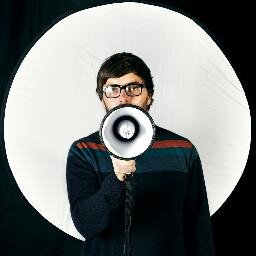
Oh Standfast is the stage name of Graham Goddard, a London-based performance poet and ranter who I’ve known for the best part of a decade. Oh Standfast has shared bills with cult comedy forces such as Tony Law and Kunt and the Gang, plying his trade at venues throughout the UK. I caught up with him to talk ranting, books, social media and the live entertainment scene. 

How would you describe Oh Standfast to a complete newcomer?

A bearded performance poet and shouter of words who you will hopefully find funny or at the very least entertaining.

How did you get into ranting?

Having spent most of my working life in data entry definitely helps but things really kicked into gear when I found myself unemployed living at my uncle’s in East London.

I would walk aimlessly for miles around the city looking for new places and people watching. The fact that now at 32 years old I can stand in the corner of a pub onstage with a megaphone and say what I think without getting chucked out is brilliant.
 

What are your main sources of inspiration?

People, passengers, colleagues, myself and a worry that the idea of the future could actually be quite dull if we all continue to sit in silence gawping at a phone waiting for someone to tell you that they like you.

Who are your key poetry/ranting influences?

Stewart Lee, John Cooper Clarke, Morrissey, Doug Stanhope, Tim Key, Bill Hicks.

Has the internet played a pivotal role in your success so far? Would you have struggled without it? Would you say that YouTube has helped? 

YouTube definitely gave me motivation to start making videos but now I’m mainly faffing about on Twitter. It’s perfect for little rhymes and observations and often provides a pretty direct response.

You’ve written about your dislike for the way in which people seem to have an insatiable need to document everything via social media – why do you think this is a bad thing?

I would be a hypocrite if I slagged it off completely as I use Twitter etc to my advantage. It’s a great free tool to promote gigs and keep directly in touch with fellow performers, promoters and fans. I do feel that the rise of social media is killing conversation and physical interaction, which is a real shame.

You’re currently promoting your book ‘Don’t You Wish Your Kindle Was A Book Like Me’? What can anyone unfamiliar with your work expect from it?

It has actual pages that you can turn and includes a selection of mostly good-humoured rants and rhymes. The book also includes great doodles of me by my good mate, illustrator and jam maker Chris Sav. It is pocket-size for convenience and all profit made goes to charity… what a guy!

What would you say are the merits of physical books versus their digital equivalents?

I am not actually a big reader of books as I don’t really have the patience to sit down for long enough but I’m working on it. My biggest gripe with the rise of the digital book is that it gives people yet another excuse to fixate on another bloody screen! I think using an eReader is more like reading an elaborate email than a novel.


When I first met you, you were heavily involved in promoting gigs. Are you still involved in this? Is it harder to get audiences out to gigs – or indeed any other live events - in the current economic climate?

I haven’t been in the promoting music game for a while after deciding to concentrate on my own projects. There are so many band nights in London that it was became too stressful and risky to compete for audiences and to keep the venues happy etc…plus I eventually ran out of money.

No matter how good your poster is or your line up is you cannot force people to go out and inevitably if you go to a gig you will find you have to spend at least 30 minutes listening to a band you don’t like, which puts people off, I think.

I prefer to not have that pressure to be honest but I learnt a lot during that time and it has helped me as a performer to have had an insight into the live industry.

You’ve set some of your spoken word material to music before, is this something that you will consider doing again?

It’s not a priority for me but should the opportunity arise I certainly wouldn’t turn it down.

Tell us about your work for the charity C.A.L.M.

I first became aware of them because I was intrigued by their name - Campaign Against Living Miserably - which I though sounded like the title of a Morrissey album. I visited their website and found out that they focused on male suicide prevention and I was shocked to discover that suicide is currently the biggest killer of young men in the UK. I volunteer as much as I can and all profits made from my book sales are donated to the charity. 


Are there any other names in the circles that you frequent that you can recommend?

Rob Auton and Jack Rooke spring to mind but there are loads of great new comedians and poets out there at the moment. Many of the gigs are free too, so people should get out there and see for themselves.
 

What are the future plans for Oh Standfast? What have been the highlights of your career so far? 

The plan is to keep going and do as many gigs as possible, if I’m knackered by the end of the week then that’s a good sign. Highlights so far include Latitude 2012 and performing on the same bill as Paul Foot and Tony Law (I’m a keen fan of both). Ultimately with fear of sounding a bit naff, I just enjoy making people laugh.

Thanks, Oh Standfast!


CULTURAL FORCES #1: OJ BORG INTERVIEW

OJ Borg is a broadcasting genius, a wonderful friend to me, one of the nicest 'famouses' you're ever likely to encounter and add...